
Wadsworth City Directory Collection Routes
Wadsworth directory research runs along three routes: the shelf, the digitized collection, and the archive. The clearest postwar shelf lead is the Medina County District Library holdings guide. It lists a printed Wadsworth sequence covering 1951-1999. The guide does not name every publisher, though. An older holdings description is narrower still. Ask staff to confirm the year and condition first. Wadsworth Public Library adds digitized local history and newspaper routes, while federal and county map collections help fill the older gaps.
| Collection | Years stated | Where held | Access |
|---|---|---|---|
| Wadsworth directory volumes | 1951-1999 in MCDL’s holdings guide | MCDL Family History collection | Confirm issue and publisher on site |
| Historical Sketch and Business Directory | 1894 | WPL Ohio Memory | Digitized, free item view |
| Medina County map with Wadsworth inset | 1857 | Library of Congress | Digitized map with resident/business directories |
| County census microfilm | 1820-1930 | MCDL Family History collection | In-person historical context |
| Historic newspapers and related collections | Coverage varies by title | WPL and MCDL | Online and microfilm routes |
Do not assume a reverse or criss-cross volume exists for every Wadsworth year. Published Wadsworth holdings include no reverse-directory run. The absence is thin evidence, though. Ask for "Wadsworth city directory," "telephone directory," "reverse directory," and the street address. Let staff identify what exists.
Note: A missing volume in a published holdings description marks a collection gap, not proof that no Wadsworth directory was ever printed.
Wadsworth City Directory at the Library
Wadsworth Public Library's research resources cover local history and genealogy. That makes the library the first local stop for a digitized or in-person directory search. Its offerings include a growing Local History Digital Library and Historical Wadsworth Newspapers. There are also the Ohio Death Certificate Index and the Ohio Obituary Index. Ohio Memory, HeritageQuest, and other history databases round out the list. Ancestry Library Edition and FamilySearch are in-library only. So a search can start online. Yet a missing directory year may still call for a visit. A supporting census record may call for a question to reference staff too.
The library sits at 132 Broad Street, Wadsworth, OH 44281. Hours run Monday through Thursday 9 a.m.-9 p.m. Friday and Saturday hours are 9 a.m.-6 p.m. Sunday hours are 1 p.m.-5 p.m. Reference help is at 330-334-5761 and reference@wadsworthlibrary.com. Bring a name spelling, an approximate year, and a street or organization. That gives staff a workable starting point instead of an unbounded surname request. The library's research-resources page displays the databases described above.
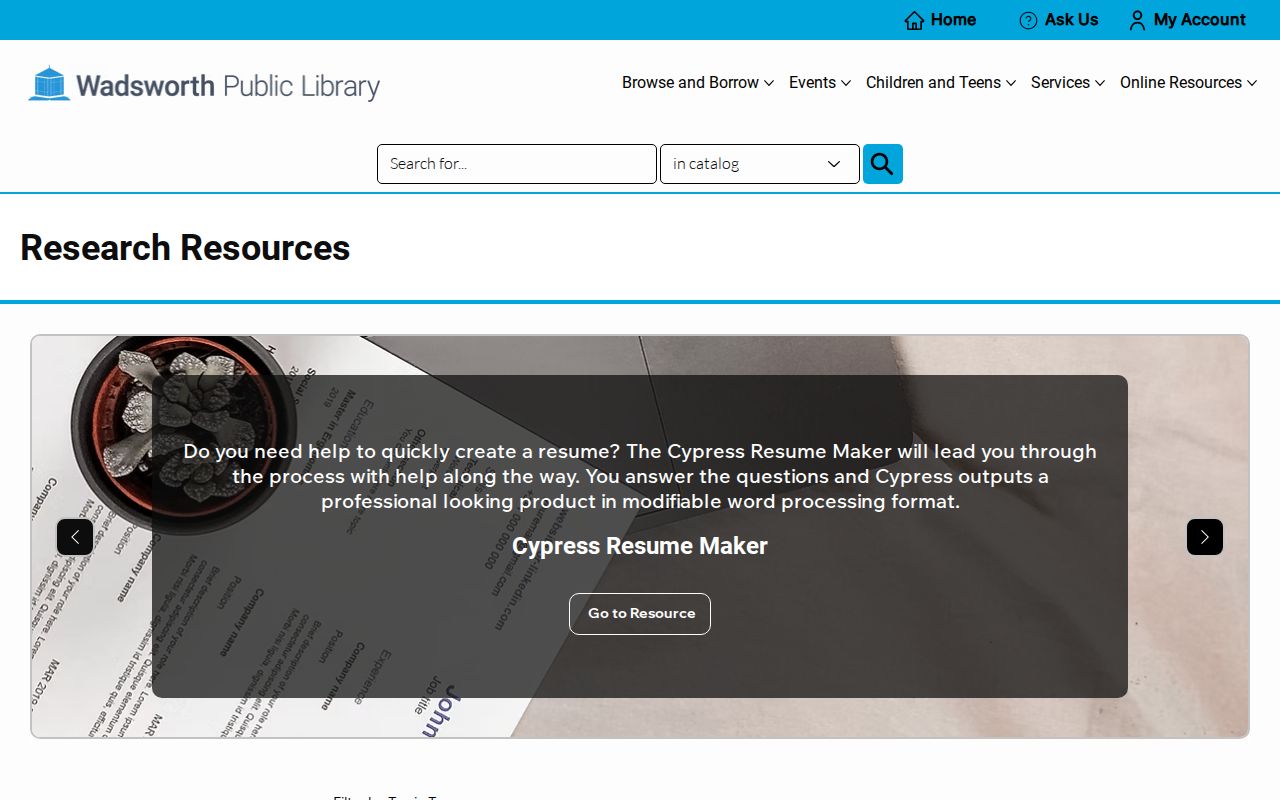
Library databases can point to a historical name. The title page, page number, and edition date are what make a Wadsworth city directory result traceable.
Wadsworth in Ohio Memory
The library's Ohio Memory collection documents Wadsworth city and township inhabitants, government, institutions, and surroundings. Its searchable material covers Wadsworth High School yearbooks, photographs, library documents, newspapers, local churches, historic homes, Blue Tip Festival material, and Ohio Match Company items. It is a practical way to place a person, institution, street, or community group in a dated local source before requesting a paper volume or a newspaper copy.
Treat the collection as a discovery tool and open the actual item. Results point to a date, title, or page. The image or transcript still has to be read in context. Much of the Wadsworth material describes a school, factory, church, or street rather than a household, and no listing should be stretched into a claim it never makes. The WPL Ohio Memory collection is the source behind the item descriptions here.
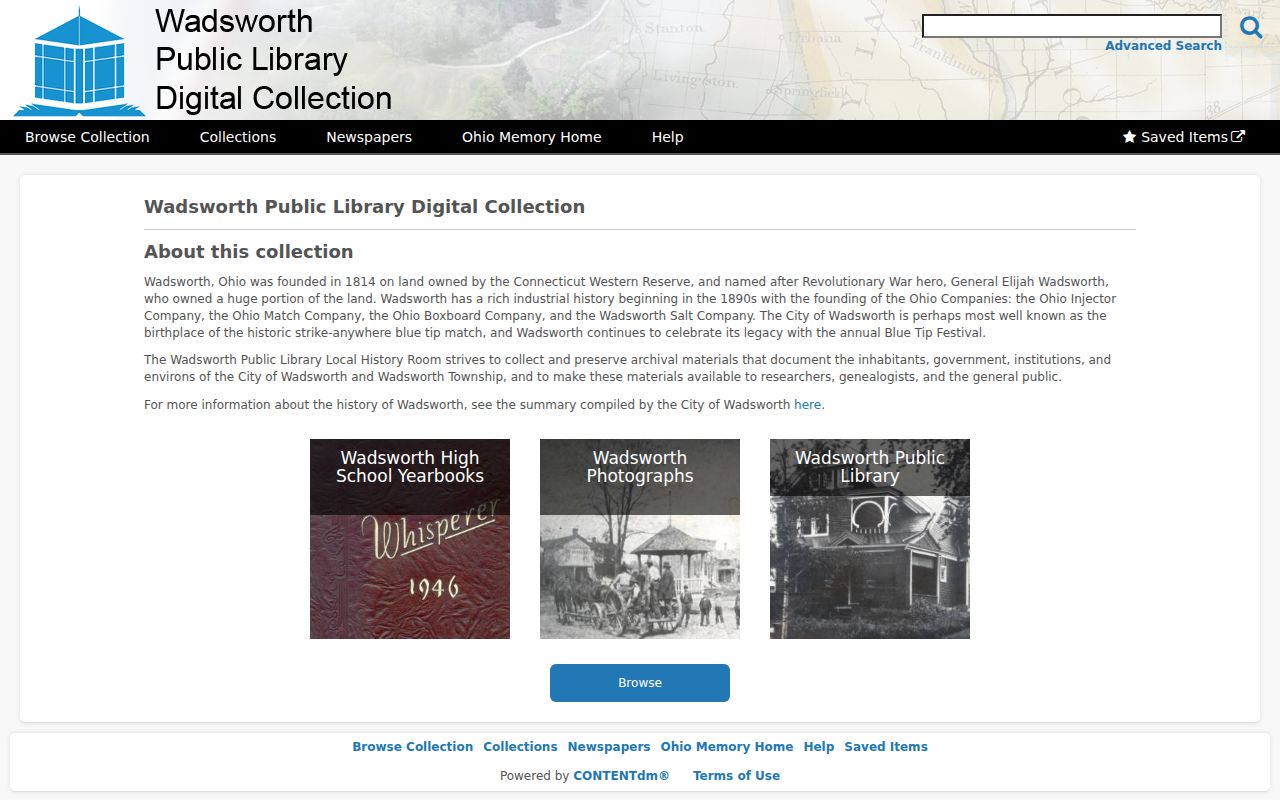
Its breadth makes the collection a companion, not a substitute. Confirm any entry against a printed Wadsworth directory volume held by the library.
Wadsworth’s 1894 City Directory Evidence
The strongest digitized item is the Historical Sketch and Business Directory of Wadsworth, Ohio. The Wadsworth Banner published it in 1894. It runs 32 pages. The first 14 give historical narrative. The business-directory portion that follows lists businessmen and occupations. The item's WPL History Room call number is 977.135 HIS. It is valuable local evidence. Its business focus means it is not a full roster of Wadsworth homes or residents, so treat it as one thread of the record rather than the whole cloth.
Record exactly what the printed item says. Note name and initials as spelled. Include printed address or affiliation if shown, plus page, publisher, and edition year. No individual entry appears in transcription here. Avoid invented labels for spouse, owner status, or street notation. Photograph or save the title page and any abbreviation key alongside the entry itself. The digitized 1894 Wadsworth Banner item is the source behind this description.
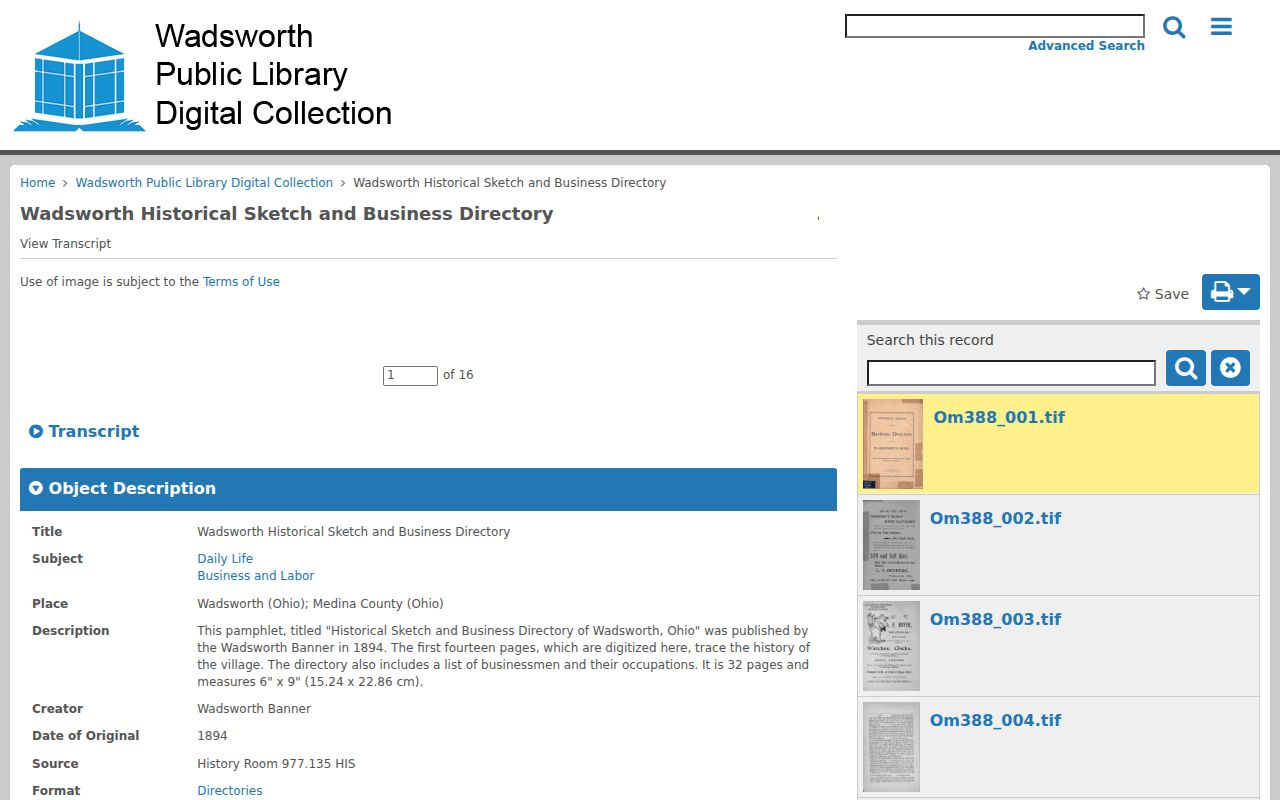
A printed title and page anchor the Wadsworth finding.
Reading a Wadsworth City Directory Entry
Read each entry as a dated printed record. It is not a modern profile. Local directory formats vary widely. A classic Wadsworth volume can carry a head of household, a spouse notation, a business, a street address, and other printed marks, but those fields must be verified in the opened volume. A telephone book runs narrower still, and an address-order section helps only after its actual title and coverage are confirmed. Document the source first, then transcribe only visible text.
| Title and edition | Identifies the exact Wadsworth source, year, and publisher. |
|---|---|
| Printed name | Preserve initials, punctuation, spelling, and any visible abbreviation. |
| Page and section | Lets another researcher return to the same entry or address-order section. |
| Address or affiliation | Use only if it appears in the item; pair it with the publication date. |
| Supporting record | Newspaper, census, map, deed, or obituary evidence that helps test the connection. |
- Criss-cross directory
- An address-order directory section, if a local volume actually includes one, that groups entries by street rather than surname.
- Householder index
- An index organized around a named household contact; it is not automatically a list of every person at the address.
- Abbreviation key
- The publisher’s explanation of shorthand. Capture the visible key before expanding any symbol in a transcription.
A missing name proves nothing. Gaps in a Wadsworth directory can come from publication lag, a recent move, a new subdivision, an unlisted number, a spelling variant, or a boundary convention. An omission never means the address stood empty.
Wadsworth Directory Newspaper Search
Printed volumes skip years, and newspapers fill the space between them. WPL steers researchers to Historical Wadsworth Newspapers. MCDL keeps county newspaper microfilm. The reels include the Medina County Gazette from 1855. The Medina County Sentinel starts in 1899. MCDL's digital archive adds full-text search and extra term fields. It also offers geography and title filters. Date-from and date-to controls round out the tools. OCR can surface a lead quickly. Still, an article or notice must be opened. It must be cited by issue, date, and page before it counts.
For a former Wadsworth resident, the WPL Obituary File has a defined request route. The partner information asks for the name, citation, and newspaper or its abbreviation. It also wants the publication date and page or column. Adult Services sends a cited item by email, telephone, post, or in person without charge. That beats trusting a search-snippet name as a full account of a person or family. The WPL obituary-request information spells out those requirements.
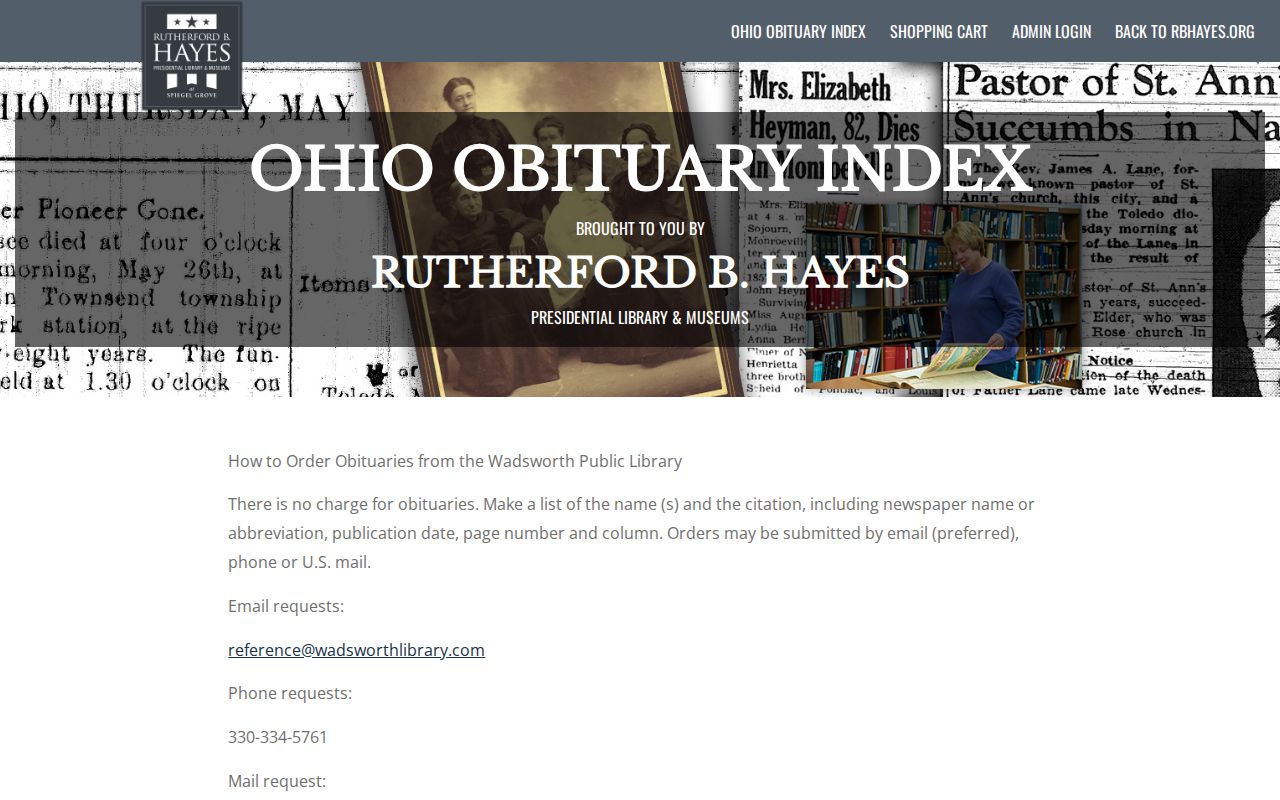
A cited obituary gains real power in combination. Match it against a directory year, a cemetery record, or a probate or Recorder event to test the date and the identity.
Wadsworth Directory Name Sources
Printed volumes are one name layer among several. WPL's digitized Wadsworth High School yearbooks are strong dated community records. A 1940 Whisperer item holds 83 scanned pages with images and transcripts. The collection reaches later years too. These sources can reconnect classmates or place an organization in a known school year. They are not contemporary contact lists. The Ohio Match Company collection adds 1940s-60s photographs and the August 1956 Match Tips newsletter. It can situate people in a local institutional setting. It is not a complete roster.
Maps yield a different kind of evidence. The Library of Congress holds an 1857 Medina County map. It carries a Wadsworth inset plus resident and business directories. MCDL and Historical Society materials identify 1874 and 1897 atlases with property-owner maps. Sanborn maps track buildings, streets, uses, and physical change over time. Maps name few residents. Pair one with a directory, census, deed, newspaper, or tax duplicate. Do this before tying a person to a place.
Tracing Wadsworth City Directories by Year
Track a household through confirmed Wadsworth directory years. Then test each move against another dated record. MCDL's census microfilm spans 1820-1930 for Medina County, giving broad household context between or before library holdings. Use the printed name as it appears. Keep alternate spellings in a separate note. An entry can place a person or address in an edition, but parentage, ownership, or a move still need supporting evidence.
- Start with a known Wadsworth year, surname spelling, and any street or organization.
- Record the title, publisher, edition year, page, and every visible printed detail.
- Check the next confirmed directory year and note changes without assuming why a name appears or disappears.
- Pair the dates with MCDL census microfilm, a newspaper item, map, tax duplicate, or recorded instrument.
- Use the WPL Obituary File or an official probate/Recorder channel when a dated death or transfer question needs a custodian source.
Verifying a modern name is a separate task. A past directory lead can be checked through the Wadsworth Resident Lookup route. That route keeps current property, voter, court, and official-record limits distinct from historical evidence.
Wadsworth Collection Time Markers
Wadsworth's known directory timeline is uneven. That unevenness helps. The digitized 1894 Wadsworth Banner item anchors the early end. MCDL's official holdings guide then lists Wadsworth directory volumes from 1951-1999, subject to on-site confirmation of individual issues. Public descriptions leave a stated gap from 1895-1950 and after 1999, but those are gaps in the descriptions, not proof that other local directories are absent.
- 1814: Wadsworth was established as Town One, Range Thirteen on Connecticut Western Reserve land.
- 1818: the place was united with Medina County after the Portage County division, affecting very early record routing.
- 1894: Wadsworth Banner published Historical Sketch and Business Directory of Wadsworth, Ohio.
- 1951-1999: MCDL’s holdings guide lists Wadsworth directory volumes, with individual issue verification advised.
- 2026: WPL says its self-directed analog-to-digital Memory Lab is coming soon, alongside an updated and expanded history room.
One initiative is current access work, not a completed opening. MCDL also received a FY2025 $100,000 IMLS grant. The grant strengthens digitization and releases material through the Medina County Memory Project. Such projects may widen access considerably. Even so, a citation in a city directory depends on the details. The date, title, and original item still decide what it can prove. Note: Confirm a Wadsworth directory's edition and physical condition with its holding library before trusting a year range from a summary list.
Wadsworth Historical Collection Gaps
When no directory issue exists, use the fallback chain instead of guessing. WPL can point a searcher to local digital history and newspapers. In-library genealogy tools and reference support are there too. MCDL's Family History collection holds nearly 900 microfilm reels. It also offers more than 1,500 county and Ohio family-history books. Genealogy appointments and county records reach into the early 1800s. The Wadsworth Area Historical Society's Johnson House Museum adds in-person context. Medina County Historical Society research appointments do too. Neither promises a searchable catalog, though.
Medina County Historical Society recommends a specific trail for historical house questions. Move from current computer records to sectional indexes. Then add grantor and grantee work, original tax duplicates, and older atlases. That method addresses land history, not a missing printed directory. Keep source types separate. Let the record custodian explain access or copy options. A trail with an exact source and date for every connection holds up far better. The Wadsworth Public Library history page describes the local research network and its resources.
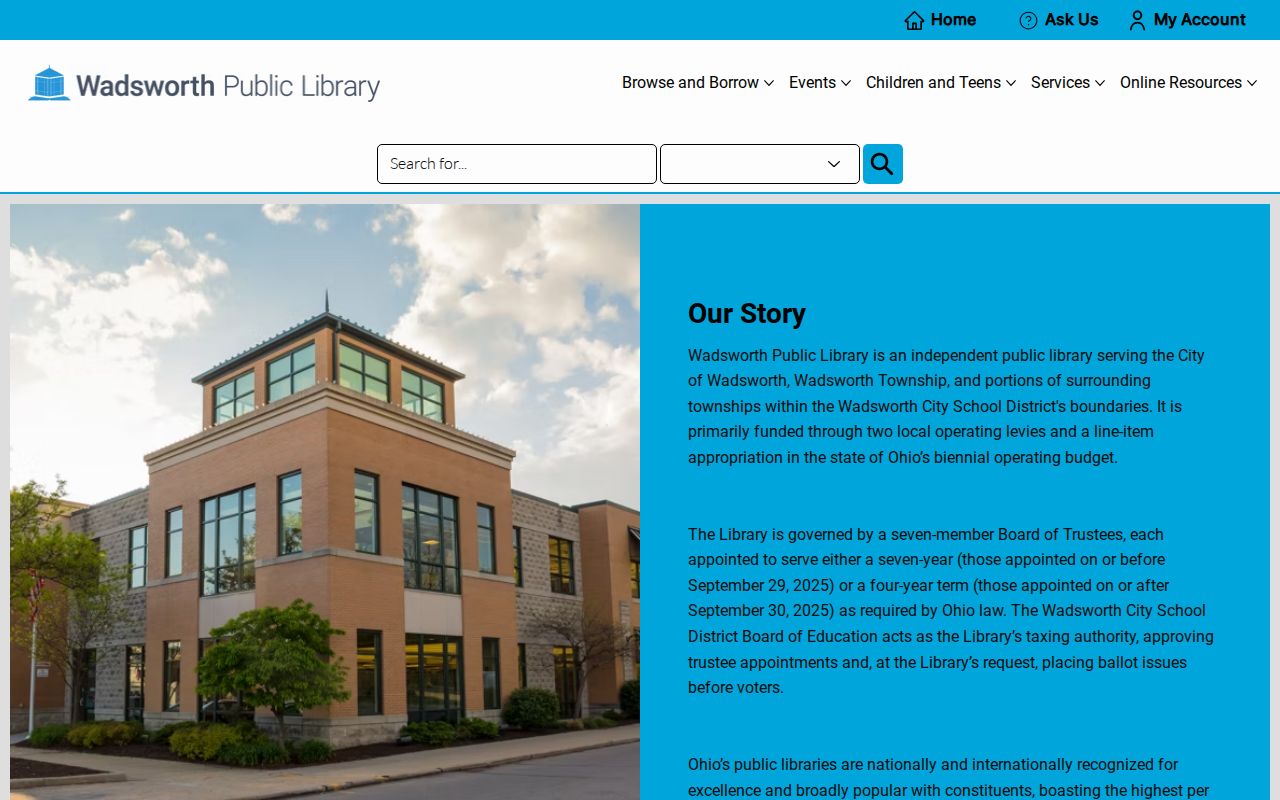
The expanded history room works as a practical Wadsworth historical-reference fallback. It keeps photographs, artifacts, books, and other local materials alongside the surrounding research network.