
Previous Wadsworth Residents by Era
Era matters in any Wadsworth resident lookup. Set a time range before chasing the address trail. The Medina County Auditor supplies the current parcel. That record carries the owner name and standardized situs address, and the Recorder connects the parcel to its recorded transfers. When the computer trail runs dry, the Medina County Historical Society points researchers to sectional indexes, deed books, and annual tax duplicates. MCDL microfilm, maps, and Wadsworth city directories help. Newspapers and census material add the household layer, and the sources overlap without any single one proving every resident at an address.
| Address source | Stated time span | Access point | Useful trail detail |
|---|---|---|---|
| Auditor parcel system | Current system; no historical cutoff published | Medina County Auditor | Current parcel, owner, situs address, and map route. |
| Recorder AVA and counter | Current and recent route; no online start year published | Medina Recorder AVA | Recorded parties, dates, legal descriptions, and document numbers. |
| MCDL deed microfilm | Indexes 1790-1923; deed records 1795-1861 | MCDL Family History collection | Earlier index and volume-page clues. |
| Wadsworth city directories | 1951-1999 listed in the holdings guide | MCDL Family History collection | Dated directory evidence; confirm the individual issue on site. |
| Census, maps, and local papers | Census microfilm 1820-1930; map dates vary | Wadsworth Public Library research resources | Household, place, and historical context when paired carefully. |
Use the current parcel when the address is known. When a modern house number stops matching older records, rely on a named former owner or the legal description instead. Check the office, volume, and place. Note: MCDL's stated date ranges describe collection coverage, so confirm details before treating an early reel as a Wadsworth record.
Wadsworth Parcel Records
The Auditor's public search takes a parcel number, an owner name, or an address. A parcel is one identified piece of county land. Its permanent parcel number is the best bridge from the current street label. It links to several other record systems. Save the situs address exactly as shown. Save the legal description and parcel number too. The parcel card lists the situs separately from the Deeded Owner Address. It also lists the Tax Payer Address. Those two fields can describe correspondence. They should not be read as proof of who lived in the Wadsworth house.
One clean starting record makes an older clue easier to test. The MC-GIS GeoMOOSE map can help locate a parcel when the address is incomplete. Its Identify tool runs from a selected parcel. It leads to a blue Deed link for a Recorder query. That saves a step. For a whole current street, the Wadsworth streets directory fits the job better. The backward method still works one property at a time.
Trace Wadsworth Deed Records
A deed chain for previous Wadsworth residents starts at the current parcel. Work from the latest buyer toward the prior owner. Medina Recorder AVA is a working index. The Recorder advises searching more than one way. Paths include party names and recorded dates. Document numbers work too. Book and page, legal-description elements, parcel, subdivision, and municipality offer more routes. Results give the document number, type, recorded date, parties, and legal information. Images can carry a separate purchase route. Write down the document number before requesting an official image or certified copy.
See the Recorder's search options first. The official gateway explains the working-index status. It also notes the need to test several paths.
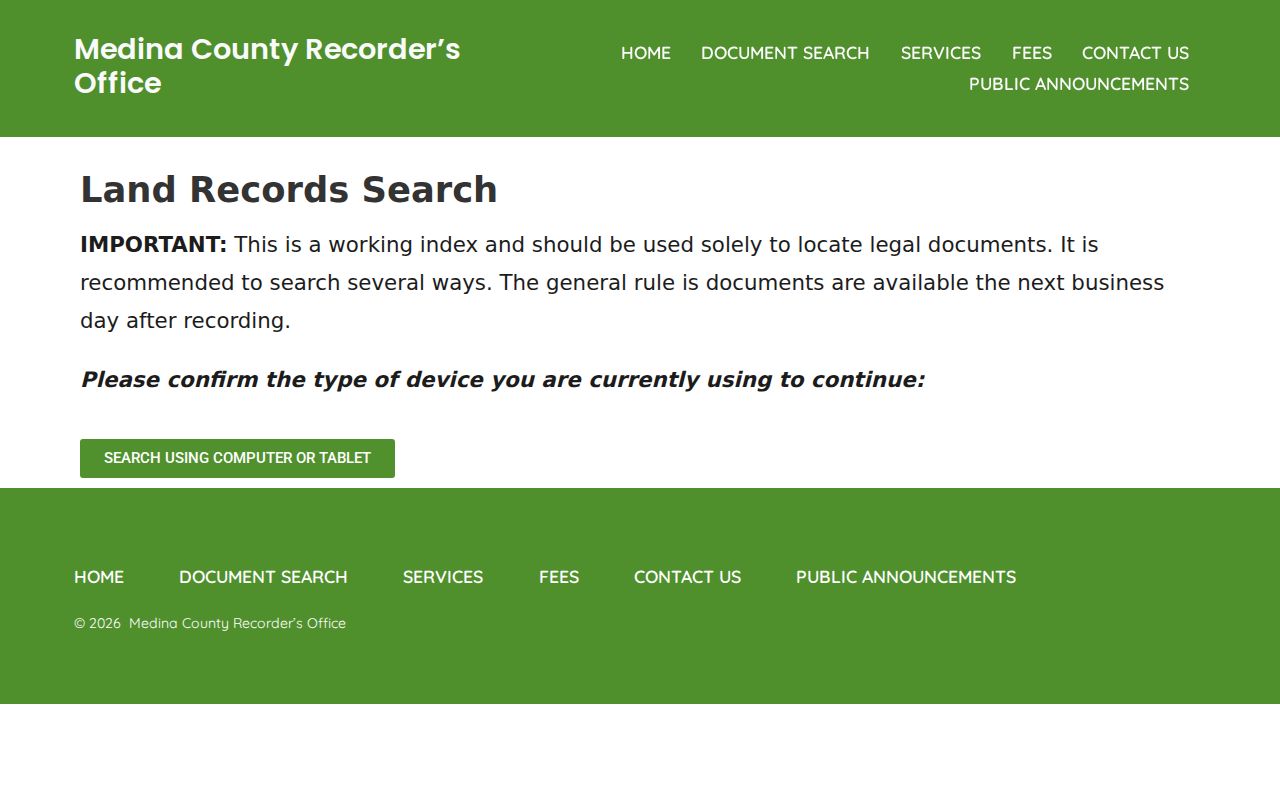
That route saves the exact document reference. Continue a Wadsworth address history at the Recorder counter, 144 N. Broadway Street, Room 117, Medina, or by calling 330-725-9782.
- Search the Auditor by address or parcel and record the current owner, permanent parcel number, and legal description.
- Run the party, parcel, or legal-description search in AVA to find the current owner's acquisition document.
- Record the seller, called the grantor, as well as the buyer, called the grantee, document number, recording date, and legal detail.
- Search the prior owner as a grantee to locate that person's earlier acquisition, then repeat the sequence backward.
- Move to sectional indexes and historical deed material when the computer route no longer supplies a useful transfer.
- Grantor
- The party transferring an interest in the recorded document.
- Grantee
- The party receiving that recorded interest.
- Chain of title
- The sequence of recorded transfers that connects one ownership interest to an earlier one.
- Legal description
- The lot, tract, acreage, subdivision, or similar land description that can connect records when street numbering changes.
Wadsworth Records Sectional Indexes
The Historical Society's house-history method notes that computer records may reach back about 30 years. After that, sectional indexes organized by township or community lots take over. That figure is guidance, not an AVA coverage promise. AVA publishes no online start year. Find the transfer that closes the computer trail. Then use the index to work through the relevant lot or tract, keeping the volume and page with every name. An early document may lack a street number.
The Historical Society's house-history guidance explains the move from computer records to deeds and tax duplicates.
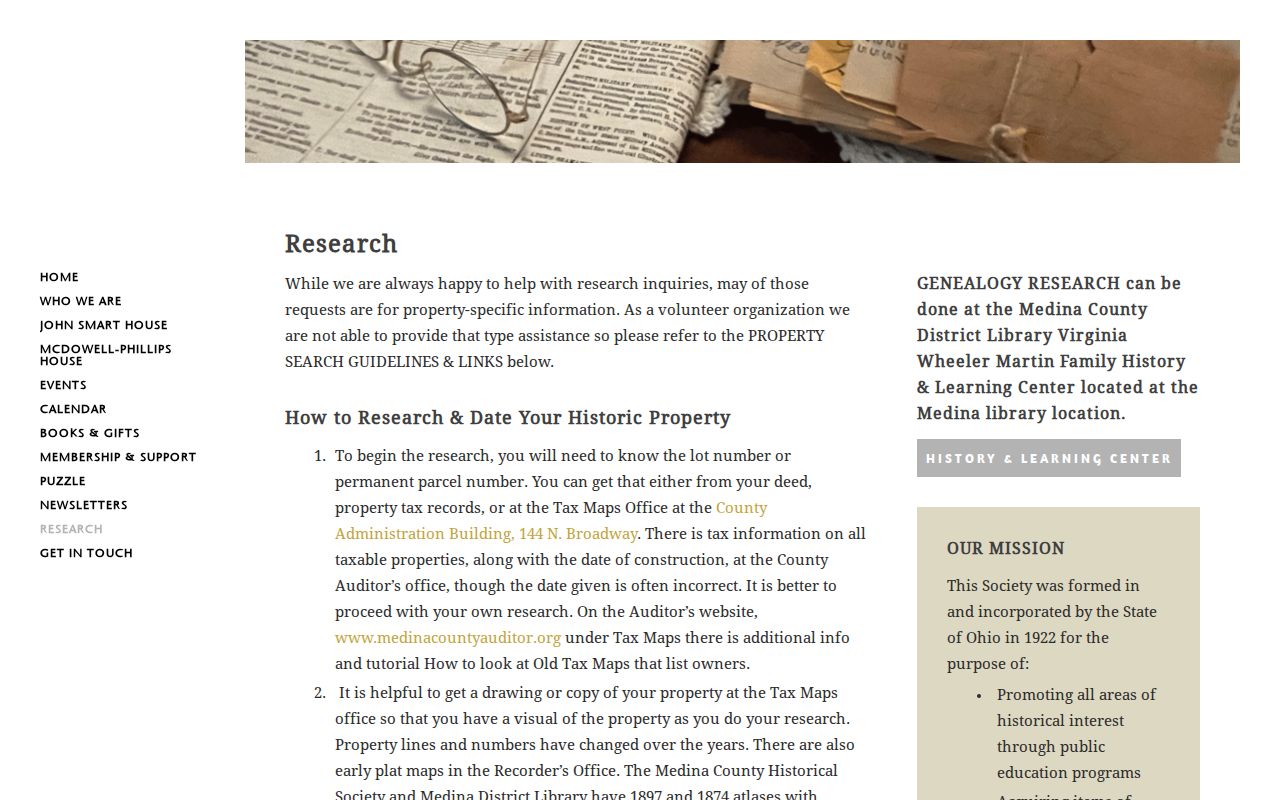
The in-person route shines here. A legal description, rather than an address, is sometimes the only dependable link between two periods of a Wadsworth resident lookup.
Wadsworth Past Tax Records
Tax duplicates offer one more thread. Use them to trace past residents and owners of a Wadsworth property. The Historical Society holds the originals. They are filed year by year, then grouped by community or township before listing owners alphabetically. Track a known owner through the right volumes. Match the property description, since surnames repeat. Some years the rolls split land value from building value. A building value appearing for the first time can hint at physical change on the parcel. Treat that hint lightly. It is not a proven construction date on its own.
Before concluding anything, check your evidence. Set the valuation shift beside a deed, a permit, a map, or a historic survey. MCDL also holds final land sales covering 1852 through 1902 in indexed volumes. Those probate-linked records often clarify a transfer that reads like an ordinary sale. In truth, it is not.
Past Wadsworth Households
Ownership is only part of the story. MCDL holds Medina County census microfilm from 1820 through 1930. Its holdings guide lists Wadsworth City Directories running 1951 to 1999. Check that run issue by issue. The public description does not promise that every annual volume or publisher is present. A directory gives a dated lead. A census schedule places a household within its own enumeration. Never force either source onto a property without a matching street, township, lot, map, or other geographic evidence.
Wadsworth Public Library offers local-history resources, historical newspapers, and genealogy databases for in-library use. MCDL staff assist with its own materials. Remote help stops at index searching or photocopies. Obituaries take a precise request. The Wadsworth Obituary File instructions call for a cited item naming the person, the publication or abbreviation, the date, and the page or column. Estate files offer another angle. Medina Probate's online docket can surface a separate estate lead. Match any death, estate, or obituary event to dates in the property trail. Never assume a family tie without that match.
Wadsworth Address Records Maps
Maps show physical change, not household identity. The 1932 Wadsworth Sanborn map survives in several editions. Its ten sheets detail buildings, streets, and land uses at that date. The Library of Congress issued an 1857 Medina County map with a Wadsworth inset plus resident and business directories. Historical Society sources add 1874 and 1897 atlases. Use them as bridges across land, roads, and lots whenever a street number shifts over time.
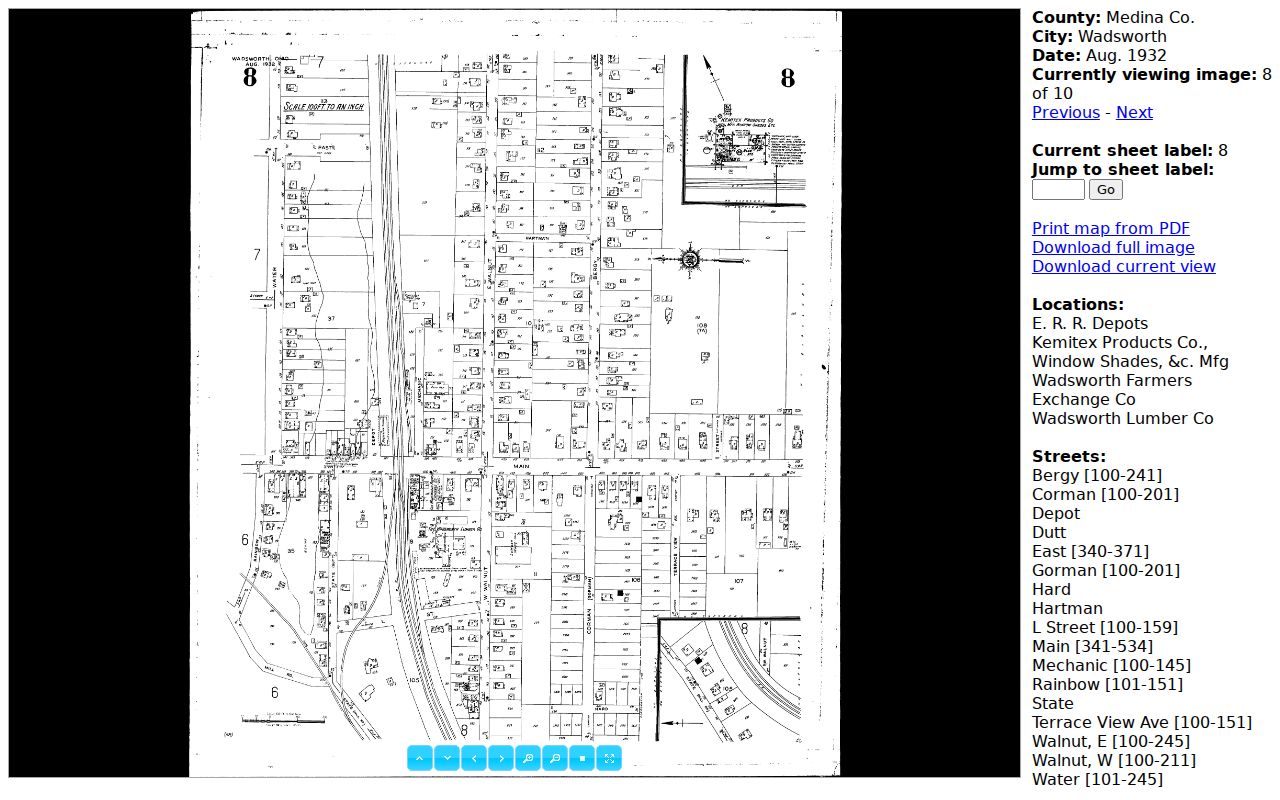
Pair the map date, sheet, legal description, and nearby landmarks with deed or directory evidence. A map shows buildings and parcel patterns. It rarely names the people tied to them.
Address continuity demands extra care. Property lines and numbers change, and no source here supports a claimed citywide Wadsworth renumbering date. Compare lot and block, tract, subdivision, book and page, prior owners, and maps before treating an old address as the modern one.
Wadsworth Permit Records
Wadsworth archives monthly permit reports. The run spans January 2014 through December 2024. Each report can carry an address, lot, project, applicant, permit number, work date, and estimated improvement value. Together they build a house's physical history. An applicant may be an owner, contractor, or agent, so a permit ties a name to a project rather than proving residence there. For work in 2025 and later, the City retained zoning functions while Medina County took residential building-code responsibility. A record search may need both custodians.
A separate historic layer exists. The Wadsworth Historic Landmark Survey drew on 1985 fieldwork and inventoried 102 properties.
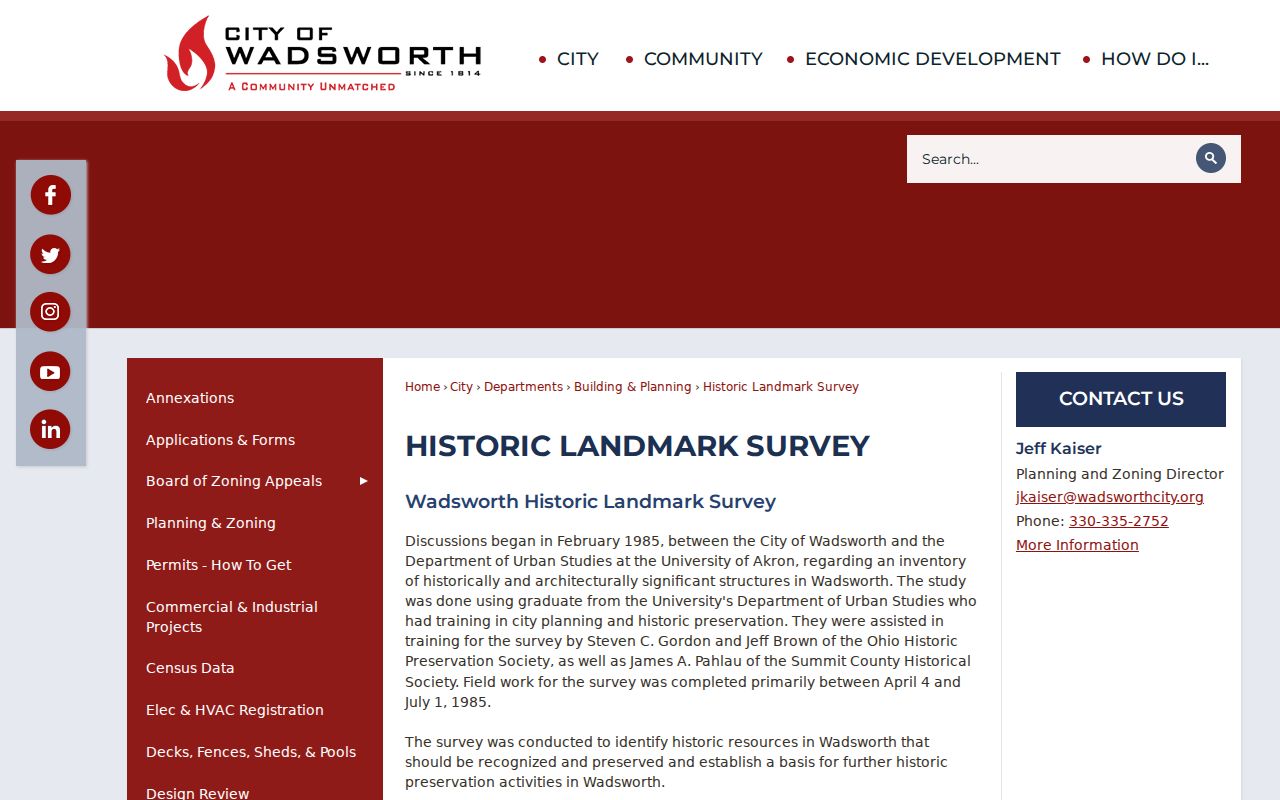
A survey record supplies dated historic context. Check it against the current parcel and the Recorder's deed chain before tying it to a present address.
Wadsworth's Earlier County Records
Wadsworth dates to 1814. It began on Connecticut Western Reserve land and answered first to Portage County. The 1818 union moved Wadsworth into Medina County. That shift decides where a very early administrative lead now sits. It does not mean every early record lives in one county collection. Some MCDL holdings carry dates that predate that union. Identify the volume's office and the exact place first. That small routing check spares a long hunt in the wrong record group.
For a deeper address trail, blend the County's document custodians with the Wadsworth library and MCDL reference collections. Search original spelling variants. Keep each source's date and citation. Leave open questions as leads rather than conclusions.